 20% OFF
BPC-157/TB-500, IGF-1 LR3 and KPV Research Set — Research Use Only
A multi-compound kit pairing BPC-157 and TB-500, supplied together at a lower combined cost than the individual vials. Supplied for laboratory research and identification purposes only.

Availability: In stock
Availability: In stock
Availability: In stock
Availability: In stock
Research Disclaimer: All products currently listed on this site are for research purposes only.
Tissue repair is studied in phases, and different compounds map to different phases.
BPC-157 + TB-500, IGF-1 LR3 and KPV — angiogenesis and cell migration, growth-factor signalling, and inflammatory pathways.
What these compounds are studied for.
The repair literature describes overlapping phases: an inflammatory phase, a proliferative phase in which tissue rebuilds and vascularises, and a remodelling phase. Compounds are studied against one or more of those phases, in specific tissues, in specific models — most of it preclinical. BPC-157 is studied for angiogenesis and tendon, ligament and gut tissue in animal models. TB-500 is studied for actin polymerisation and repair-cell migration. IGF-1 LR3 is a modified analogue studied for extended growth-factor signalling. KPV is an alpha-MSH fragment studied for anti-inflammatory activity in gut and mucosal models. A marker moving in a model is not a tissue healing in a person, and none of these is approved to treat anything.
What’s in this stack.
Pre-mixed vial containing both peptides. BPC-157 is studied for angiogenesis and for tendon, ligament and gut tissue in animal models. TB-500 is studied for actin polymerisation and repair-cell migration. These are two separate research questions; supplying them in one vial is a packaging convenience and not a statement that they act together.
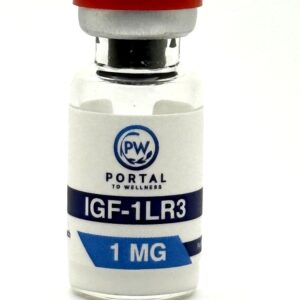
Modified IGF-1 analogue with a 13-amino-acid N-terminal extension that reduces IGF-binding-protein affinity. Studied for extended growth-factor signalling in research models.
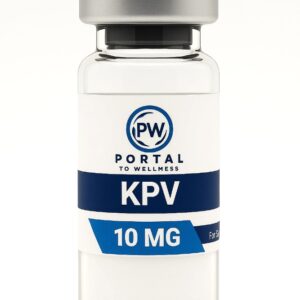
C-terminal tripeptide of alpha-MSH (Lys-Pro-Val). Studied for anti-inflammatory activity in gut and mucosal models, including effects on NF-κB signalling in intestinal epithelium.
What the published work describes.
BPC-157 + TB-500 — Preclinical Angiogenesis and Cell-Migration Models
BPC-157 is a synthetic pentadecapeptide stable in gastric juice. It promotes angiogenesis through VEGF and nitric oxide pathway upregulation, and upregulates growth hormone receptor expression at injury sites — accelerating tendon-to-bone healing in research models. TB-500 promotes G-actin sequestration and F-actin polymerization, the cytoskeletal process that allows repair cells to migrate toward injury signals. The two peptides are supplied pre-mixed. PTW does not publish guidance on combining compounds.
IGF-1 LR3 — IGF-1 Receptor Ligand
The N-terminal extension reduces binding to IGF-binding proteins, extending half-life and prolonging downstream signalling. Research models report effects on satellite-cell activation and on IGF-1 receptor-mediated proliferation. Those are findings in models.
KPV — α-MSH C-terminal Tripeptide
Lys-Pro-Val is the C-terminal tripeptide of alpha-MSH, retaining anti-inflammatory activity in a more stable form. In research models it downregulates NF-κB signalling in immune cells and intestinal epithelium, reduces inflammatory cytokine expression (TNF-α, IL-6, IL-1β), and is studied for intestinal epithelial barrier repair in IBD models. That is a description of findings in models, not of what happens in people.
Save 20% when you buy these together.
$55.20
$49.60
$44.80
$149.60
Repair-Pathway Research Set — all three compounds →
Bundle pricing applied automatically at checkout. Each compound is also available individually.
Not sure which compounds fit your research? Browse the Research Hub →
- Processing: Orders ship within 1–2 business days
- Domestic delivery: 3–5 business days via USPS Priority / UPS Ground
- Free shipping on orders over $100
- Temperature handling: Cold-chain packaging available on request for lyophilized peptides
- Tracking: Emailed automatically at time of dispatch
- Store lyophilized (dry) peptides at −4 °F for long-term stability
- Protect from light and moisture at all times
- Do not freeze
- Where the Storage row in the product specification above differs, follow the specification
Pairs Well With
Related research products

Reviews
There are no reviews yet.