 15% OFF
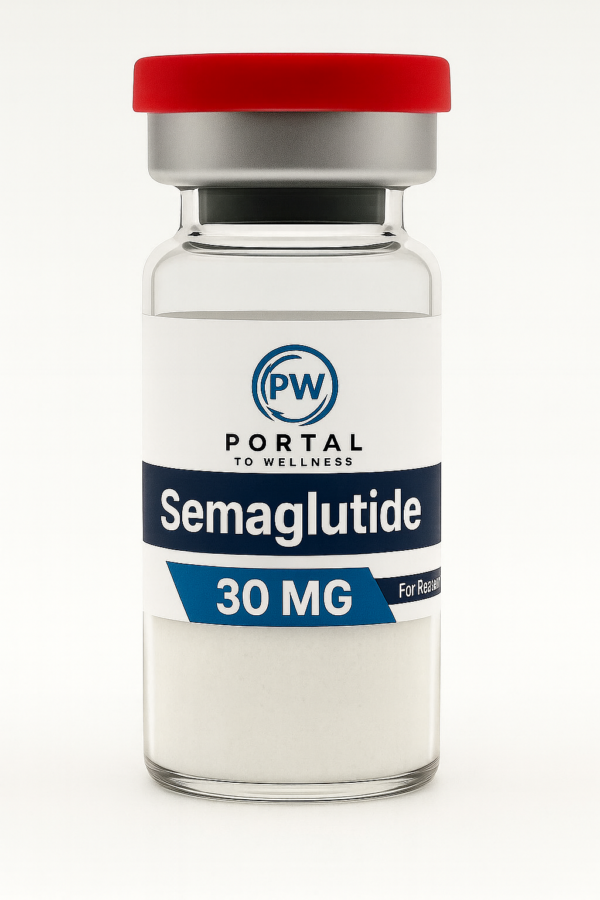
Semaglutide – 5mg/vial — Research Use Only
Availability: In stock
3–4 vials — 5% off · 5–9 vials — 10% off · 10+ vials — 15% off
Applied automatically in the cart. Combines with a discount code up to 20% off in total, and stacks on top of the subscription discount.
Research Disclaimer: All products currently listed on this site are for research purposes only.
- Acts at hypothalamic and brainstem GLP-1 receptors in the published mechanism literature
- Metabolic endpoints are reported across the published trial programme
- Cardiovascular endpoints were studied in the SELECT trial (2023)
- Extended half-life of approximately seven days, attributed to reversible albumin binding
Mechanism of Action
Semaglutide is a GLP-1 receptor agonist with a C18 fatty diacid side chain that enables reversible albumin binding, extending its half-life to approximately 7 days. It binds GLP-1 receptors in the hypothalamus and brainstem, and is studied for effects on appetite signalling, gastric emptying and glucose-dependent insulin secretion. Sold strictly for laboratory research use; not proven in humans; not FDA-approved.
Research Overview
The SELECT trial (2023) evaluated major adverse cardiovascular events in overweight adults without diabetes. Ongoing trials are evaluating applications in metabolic-associated steatohepatitis (MASH), obstructive sleep apnoea, and neurodegenerative disease. Human evidence for research-grade material is not established.
Research & Stack Notes
The published semaglutide literature is largely single-compound. Comparative pharmacology research has examined how extended-half-life GLP-1 agonists differ from short-acting analogues. Sold for laboratory research use only.
Educational purposes only. Research use. Not evaluated by the FDA.
Overview
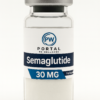
Compare Semaglutide Sizes
Two vial sizes of the same compound.
| Product | Concentration | Price | Price / mg |
|---|---|---|---|
| Semaglutide 5mg | 5mg/vial | $24.00 | $4.80 |
| Semaglutide 30mgLowest $/mg | 30mg/vial | $69.00 | $2.30 |
Semaglutide is a synthetically modified GLP-1 receptor agonist and one of the most extensively characterized compounds in published incretin pharmacology literature. Originally developed as a long-acting analogue of glucagon-like peptide-1 (GLP-1), semaglutide has accumulated a substantial body of preclinical and clinical pharmacology data across metabolic, cardiovascular, and neurological research domains, making it a widely referenced compound in GLP-1 receptor biology studies.
What It Is
Semaglutide is a 31-amino acid synthetic analogue of human GLP-1(7-37) featuring three key structural modifications: an Aib substitution at position 8 for DPP-IV resistance, a lysine-to-arginine substitution at position 34, and a C18 fatty diacid chain attached via a linker at position 26 — the feature responsible for albumin binding and extended plasma half-life. Molecular formula: C₁₈₄H₂₉₁N₄₅O₅₉. Molecular weight: approximately 4,113.58 Da. CAS number: 910463-68-2.
Research Spotlight
Semaglutide’s GLP-1 receptor agonist activity has been examined in published preclinical research across metabolic, cardiovascular, and neurological models. Metabolic research has investigated pancreatic beta-cell insulin secretion, hepatic glucose production inhibition, and adipose tissue lipolysis regulation in in vivo animal models. Gastric emptying rate and satiety signaling pathway studies have been documented in multiple rodent model publications. Cardiovascular research has examined effects on atherosclerotic plaque markers, cardiac inflammatory mediators, and vascular endothelial function parameters in preclinical models. Neurological research has explored GLP-1 receptor expression in the central nervous system, including semaglutide’s influence on dopaminergic circuits, neuroinflammation markers, and amyloid-related pathways in rodent models. Additional published research has examined hepatic fibrosis markers in NASH rodent models and cytokine profile modulation (TNF-alpha, IL-6, IL-1beta) in systemic inflammatory models.
Key Research Applications
- GLP-1 receptor signaling pathway and downstream insulin secretion modeling
- Hepatic glucose production and gluconeogenesis suppression studies
- Adipose tissue lipolysis, energy expenditure, and body composition research
- Gastric emptying rate and gastrointestinal motility investigations
- Cardiovascular risk marker modulation and endothelial function research
- Central nervous system GLP-1 receptor expression and dopaminergic circuit studies
- Neuroinflammation and amyloid pathway investigation in rodent models
- Anti-inflammatory cytokine profile modulation research
- NASH, hepatic steatosis, and hepatic fibrosis marker studies
- Comparative GLP-1 receptor agonist pharmacology (vs. liraglutide, dulaglutide)
For laboratory research use only. Not intended for human or veterinary use, medical diagnosis, treatment, or prevention of any disease or condition. This product has not been evaluated by the FDA or any regulatory agency. Must be handled by qualified research personnel in a compliant laboratory setting.
Not sure which compounds fit your research? Browse the Research Hub →
Related research (educational)
Research Library
- Injectable vs. Oral GLP-1: What Researchers Need to Know
- GLP-1 Receptor Agonists and Biological Aging: What the Research Shows
- Semaglutide and Biological Aging: What the Epigenetic Clock Data Shows
- Preserving Lean Mass During GLP-1 Research: What the SEMALEAN Data Showed
- Regulatory Pathway Labels Explained: Branded, Generic, Compounded and RUO →
- Cagrilintide Semaglutide Trial Data
- Semaglutide & Knee Osteoarthritis
- GLP-1 Dosing Errors: Telehealth Data
- GLP-1s and Eating Disorder Risk
- GLP-1 vs. Bariatric Surgery in Teens: What New Data Shows
- GLP-1 Prior Authorization Data
- Wegovy Pill Monthly Cost, Explained
- GLP-1 Additives: What a New JAMA Study Found
- GLP-1 Cancer Risk: What Trials Show
- GLP-1 Mood Research: What Trials Show
- Real-World GLP-1 Outcomes vs Trial Results
- GLP-1 Receptor Agonists: Mechanisms in the Literature
- Processing: Orders ship within 1–2 business days
- Domestic delivery: 3–5 business days via USPS Priority / UPS Ground
- Free shipping on orders over $100
- Temperature handling: Cold-chain packaging available on request for lyophilized peptides
- Tracking: Emailed automatically at time of dispatch
- Store lyophilized (dry) peptides at −4 °F for long-term stability
- Protect from light and moisture at all times
- Do not freeze
- Where the Storage row in the product specification above differs, follow the specification
Pairs Well With
Related research products
Reviews
There are no reviews yet.