 15% OFF
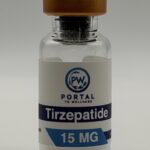
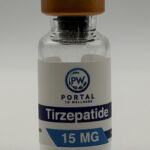
Tirzepatide – 15mg/vial (Research Use Only)
Dual GIP/GLP-1 receptor agonist peptide, widely studied in metabolic and body-composition research. Current testing status is stated in full on our Lab Testing & Verification page.
Availability: In stock
3–4 vials — 5% off · 5–9 vials — 10% off · 10+ vials — 15% off
Applied automatically in the cart. Combines with a discount code up to 20% off in total, and stacks on top of the subscription discount.
Research Disclaimer: All products currently listed on this site are for research purposes only.
- Dual GIP and GLP-1 receptor activation — a distinct mechanism from single-incretin compounds
- SURMOUNT-1 (2022) is the principal published Phase 3 trial in the tirzepatide literature
- GIP receptor activity is studied for its effects on adipose tissue lipid metabolism
- Insulin sensitivity is a reported endpoint across the published trial programme
- Extended half-life relative to the native incretin hormones
Mechanism of Action
Tirzepatide is a dual GIP (glucose-dependent insulinotropic polypeptide) and GLP-1 receptor agonist built on a single synthetic peptide backbone, activating both incretin receptors rather than one. GIP receptor activation is studied for its effects on adipose tissue lipid metabolism and on GLP-1 appetite signalling through a distinct physiological pathway. Sold strictly for laboratory research use; not proven in humans; not FDA-approved.
Research Overview
SURMOUNT-1 (2022) is the principal published Phase 3 trial in the tirzepatide literature, conducted in non-diabetic adults over 72 weeks. SURPASS-CVOT is evaluating cardiovascular endpoints. Additional trials are investigating tirzepatide in MASH, heart failure with preserved ejection fraction, and obstructive sleep apnoea. Portal to Wellness supplies tirzepatide for laboratory research use only and makes no claim about its effects in humans.
Research & Stack Notes
The dual-receptor mechanism is the defining feature studied in the published literature — activating both GIP and GLP-1 pathways rather than one. Comparative pharmacology research has examined how this differs from single-pathway GLP-1 compounds across metabolic, cardiovascular, and hepatic models. Sold for laboratory research use only.
Educational purposes only. Research use. Not evaluated by the FDA.
Overview
Tirzepatide is a synthetic dual-agonist peptide that activates both the glucose-dependent insulinotropic polypeptide (GIP) receptor and the glucagon-like peptide-1 (GLP-1) receptor. Its dual-receptor mechanism provides a pharmacological tool for studying complementary incretin signaling pathways simultaneously, and it has been extensively examined in published preclinical and clinical pharmacology literature focused on metabolic, cardiovascular, and hepatic biology.
What It Is
Tirzepatide is a 39-amino acid synthetic peptide designed as a dual agonist at the GIP receptor (GIPR) and GLP-1 receptor (GLP-1R). It is based on the native GIP sequence with modifications enabling GLP-1 receptor co-activation and a C20 fatty diacid chain at lysine-26 for extended half-life via albumin binding. Molecular formula: C₂₂₅H₃₄₈N₄₈O₆₈. Molecular weight: approximately 4,813.45 Da. CAS number: 2023788-19-2.
Research Spotlight
The research profile of tirzepatide is defined by its dual-receptor mechanism, which activates both the GIP and GLP-1 pathways — systems with distinct but overlapping roles in postprandial glucose regulation, insulin secretion, glucagon suppression, and energy homeostasis. Published preclinical research has investigated tirzepatide’s differential effects on adipose tissue (GIP receptor-mediated) versus appetite and gastric motility (GLP-1 receptor-mediated), providing mechanistic data for comparative metabolic studies. Cardiovascular research has examined lipid profiles, myocardial inflammation markers, and vascular remodeling parameters in animal models. Comparative pharmacology studies have evaluated tirzepatide against semaglutide and other GLP-1 agonists to quantify receptor binding affinity and tissue-specific signaling differences. Additional published research has explored renal and hepatic biomarker responses in NASH and kidney function models, as well as skeletal muscle protein synthesis pathways in relevant animal preparations.
Key Research Applications
- Dual GIP and GLP-1 receptor co-activation and downstream signaling studies
- Comparative receptor pharmacology vs. GLP-1 mono-agonist compounds
- Pancreatic beta-cell insulin secretion and glucose-dependent insulinotropic modeling
- Adipose tissue biology, lipolysis, and body composition research
- Appetite, satiety signaling, and central GLP-1 pathway investigations
- Cardiovascular risk marker modulation and cardiac inflammation research
- NASH, hepatic steatosis, and renal function marker studies
- Skeletal muscle protein synthesis and lean mass preservation modeling
- Long-acting fatty acid-conjugated peptide pharmacokinetics
- Incretin receptor selectivity and synergy research
For laboratory research use only. Not intended for human or veterinary use, medical diagnosis, treatment, or prevention of any disease or condition. This product has not been evaluated by the FDA or any regulatory agency. Must be handled by qualified research personnel in a compliant laboratory setting.
Not sure which compounds fit your research? Browse the Research Hub →
Frequently Asked Questions — Tirzepatide
What makes Tirzepatide a dual agonist and why does it matter?
Tirzepatide binds both the GLP-1 (glucagon-like peptide-1) and GIP (glucose-dependent insulinotropic polypeptide) receptors. In the published literature, GLP-1 receptor agonism is associated with delayed gastric emptying and altered satiety signalling, while GIP receptor agonism is associated with glucose-dependent insulin secretion and a possible role in adipose tissue metabolism. Studies of the dual mechanism report metabolic endpoints distinct from those of single-receptor GLP-1 agonists. These findings come from clinical trials of pharmaceutical-grade tirzepatide conducted under medical supervision and are provided as background on the molecule.
How does Tirzepatide differ from Semaglutide mechanistically?
Semaglutide is a single-receptor GLP-1 agonist. Tirzepatide binds both the GLP-1 and the GIP receptor, so the two compounds engage different receptor sets. The published trial programmes for each measured body-weight and HbA1c endpoints, and comparative analyses exist in that literature. Portal to Wellness does not reproduce figures from those trials on product pages: they describe pharmaceutical-grade material given to people under medical supervision, which is not what is sold here.
What has published research examined for Tirzepatide?
The SURPASS and SURMOUNT clinical trial programs evaluated Tirzepatide across metabolic and body-composition endpoints, and comparative studies have measured its receptor binding and tissue-specific signaling against other incretin compounds. PTW Tirzepatide is supplied for laboratory research purposes only and is not intended for human use.
What purity standard applies to this tirzepatide?
The supplier specification is ≥98% purity. Portal to Wellness supplies it for laboratory research use only.
What is the molecular structure of Tirzepatide compared to native GIP?
Tirzepatide is a 39-amino-acid synthetic peptide based on the native GIP sequence, modified to incorporate GLP-1 receptor affinity. A C20 fatty diacid chain is attached via a linker to enable albumin binding and extend the half-life to approximately 5 days.
Related Research (Educational)
- Body Recomposition with GLP-1 Peptides: What the Research Shows
- Muscle Preservation During Caloric Restriction: Research Compound Insights
- Visceral Fat and Metabolic Health: What Researchers Are Studying
Research Library
- Injectable vs. Oral GLP-1: What Researchers Need to Know
- GLP-1 Receptor Agonists and Biological Aging: What the Research Shows
- Preserving Lean Mass During GLP-1 Research: What the SEMALEAN Data Showed
- Regulatory Pathway Labels Explained: Branded, Generic, Compounded and RUO →
- SURMOUNT-MMO Trial Explained
- GLP-1 Frailty Risk in Older Adults
- GLP-1 Dosing Errors: Telehealth Data
- What Determines Regulatory Status
- GLP-1s and Eating Disorder Risk
- GLP-1 vs. Bariatric Surgery in Teens: What New Data Shows
- FDA Warning Letters Hit GLP-1 Telehealth Marketing: What the 2026 Crackdown Means
- GLP-1 Prior Authorization Data
- Compounded Peptide vs Research Peptide
- Biomarkers vs Clinical Outcomes in Research
- Biomarkers vs Clinical Outcomes in Research
- Obesity Subtype, Tirzepatide Response
- GLP-1 Additives: What a New JAMA Study Found
- GLP-1 Cancer Risk: What Trials Show
- GLP-1 Mood Research: What Trials Show
- Real-World GLP-1 Outcomes vs Trial Results
- GLP-1 Receptor Agonists: Mechanisms in the Literature
- Processing: Orders ship within 1–2 business days
- Domestic delivery: 3–5 business days via USPS Priority / UPS Ground
- Free shipping on orders over $100
- Temperature handling: Cold-chain packaging available on request for lyophilized peptides
- Tracking: Emailed automatically at time of dispatch
- Store lyophilized (dry) peptides at −4 °F for long-term stability
- Protect from light and moisture at all times
- Do not freeze
- Where the Storage row in the product specification above differs, follow the specification
Frequently Asked Questions
Semaglutide is a GLP-1 receptor agonist. Tirzepatide is a dual agonist at the GIP and GLP-1 receptors. In the published literature, GLP-1 receptor signalling is associated with gastric emptying and satiety signalling, and GIP receptor signalling with insulin secretion and adipose tissue metabolism. Clinical trials of both molecules used pharmaceutical-grade material under medical supervision, and Portal to Wellness does not reproduce trial outcomes on product pages.
Pairs Well With
Related research products





Reviews
There are no reviews yet.